copyright reserved 2011

copyright reserved 2011
Showing posts with label soil. Show all posts

Sunday, 17 July 2011

Good Soil Bugs – Make them feel at home, and make it good enough to eat!

Often referred to as the soil food web, a healthy, living soil will be teeming with microbes, both beneficial and pathogenic (infective; able to cause disease). Including species of bacteria, fungi, algae, nematodes, protozoa, arthropods and earthworms, soil microbes are all vital in maintaining a healthy soil structure.

Often we’ll hear of a garden that is receiving the best of everything but still not thriving, something is just not right. The problem could be lack of beneficial soil microbes. How can this happen?

There are a number of reasons for a lack of microbes including indiscriminate use of fungicides, biocides, herbicides, nematicides or fumigated landscape soils and high salt fertilisers.

Microbe brewing is one way to overcome these problems and is easier than beer brewing. In just 24 hours, in ideal conditions you can brew billions of microbes that will help bring your soils to life!

As with all garden inputs, wear gloves and a breathing mask to ensure you don’t breathe the microbes into your lungs.

Once you have brewed and applied your microbes help create a comfy microbe home with regular composting, add minerals like Soft Rock phosphate and feeding the soils with kelp, fish, aloe, molasses, humic acid and fulvic acid. 

Friday, 15 July 2011

Sulphur (S) – Soil Health and Your Health


Soil: Sulphur is essential for our detoxification systems and in a world with 74,000 registered chemicals we need all the sulphur we can get! Sulphur is stored in humus, so in soils with low organic matter we need to add sulphur each season.

Cow manure contains good levels of sulphur, but luxury levels of sulphur can be obtained from other natural products. If you have a heavy clay soil then gypsum should be used. It is the sulphur component of this material that bonds with the soil tightening minerals to create leachable compounds. You will also be delivering good levels of sulphur to your garden.

In Plants and Pets: Sulphur imparts flavour to fruit and vegetables and it is the main component of strong smelling onions and garlic. It is sulphur that makes members of the allium family so protective for our health.

Two essential amino acids are sulphur dependant and this mineral offers a big boost to all root crops (particularly potatoes).

Your pets will also benefit from sulphur. One of the most effective treatments for ticks and fleas involves a raw egg and a tablespoon of coconut oil fed to the dog each day (eggs are an excellent source of sulphur). Alternatively, you can feed dogs elemental sulphur every two or three days at rates of half a teaspoon for small dogs and a whole teaspoon for a large dog. You don’t need to poison your dog with toxic chemicals to prevent parasites!

Essential Oxygen (O)


Most beneficial microorganisms require good levels of oxygen to thrive. In fact, it could be argued that oxygen is the most important element in biological gardening. Aerobic soils are richly supplied with oxygen while anaerobic soils lack this element.  Earthworms create pathways for oxygen to enter the soil and calcium opens up (flocculates) the soil to let it breath. Gypsum can break up heavy clay soils to sponsor better oxygen intake, while compost can improve you soil to create a highly desirable crumb structure.  Light tillage with a fork can also help aerate soils.

Feed the Soil and Feed the Plant, or Soil good enough to eat!


After you have addressed mineral balance with lime or dolomite and a complete fertiliser, then it is time to fee the soil life and feed the plant. Mineral update is determined by mineral imbalance and soil microbes.

The best way to build soil microbes is with a champagne food source and/or compost. You may be quite content with the response from balancing and feeding the soil but if you are keen to achieve exceptional, problem-free growth, then you might also consider foliar feeding the plant.

Foliar feeding is a direct route into the plant, which bypasses any problems in the soil. Stomata are tiny little mouths on the underside of plant leaves, which are actually designed to capture carbon dioxide for photosynthesis and for moisture transpiration. Stomata are, in effect, the gateway between the outside and the inside of the plant and when nutrients are supplied to the leaf and enter via the stomata it is actually 12 times more efficient than applying those nutrients to the soil.  Apart from this increased efficiency , there are other reasons to foliar feed. Soil-based lockups where too much of one mineral antagonises the uptake of another are common and foliar feeding bypasses these lockups and delivers directly to the plant.

Some plants will respond better to a soil application of liquid minerals while others prefer foliar applications.

Mastering Magnesium (Mg)


Soil: Magnesium tends to tighten soils so it can be used to improve the loose structure of sandy soils. However, if there is too much magnesium in a heavy clay it makes the soil sticky and can tighten it up with an associated restriction of oxygen and soil-life. Gypsum is the best tool to reduce a magnesium excess.

Plants: Magnesium is the central molecule in chlorophyll, the green pigment which houses the sugar factories that fuel photosynthesis. If the soil is missing magnesium, the lifeblood of the leaf will be lacking and that loss of chlorophyll will be clearly visible. It is a little like the anaemia associated with iron deficiency in humans as magnesium is to plant sap what iron is to blood, Magnesium is the most important enzyme activator of all minerals so it impacts many different aspects of plant growth and health.

Deficiency Symptoms:  Interveinal mottling (pale blotches between the veins) occurring on the older leaves. There may also be premature leaf drop in some species.

People: Magnesium has been claimed to be the single biggest deficiency in the western world. It is the “master mineral” responsible for 350 different enzymes. This missing mineral is needed for a healthy immune and detoxification system and it is an important mineral for heart health. It is important for bone health as calcium but often ignored.

Animals: Magnesium plays a major role in neuro-muscular health and bone density in animals. Grass tetany in ruminant animals is directly linked to a magnesium deficiency.

Common Forms: Magnesium carbonate (magnesite), dolomite and sulphate (Epsom salts). 

Connecting with Calcium (Ca)


Soil: Calcium opens up (flucculates) the soil, improving structure and allowing roots, earthworms, oxygen, water and microbes to move freely through the soil. Calcium is a critically important nutrient for the health of all life in the soil and it is also an important key to achieving the ideal soil pH of 6.4 (where nutrients are most available).
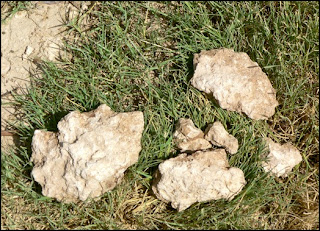
Alkaline soil with calcium carbonate deposits 


Plants: Calcium is often referred to as the ‘trucker of all minerals” in relation to its role mobilising other nutrients. Calcium sponsors cell division and hence it promotes root, stem, and leaf growth. Calcium is also a major mineral governing cell strength and associated disease resistance. This mineral often determines the quality of your fruit and vegetables and if you are seeking a problem-free garden then it should always be a first priority to address any calcium deficiencies.

Plant Deficiency Symptoms: Stunted root systems and a lack of vegetable vigour. Blossom end rot in tomatoes, capsicums and zucchini. Internal browning or blackening of celery, potatoes and brussels sprouts.

People: Calcium is one of the major minerals linked to bone health and skeletal strength but needs to be balanced with magnesium. It is also a key player in cell function and it regulates the uptake of minerals into our cells. Just as it influences plant uptake of minerals, calcium is an electrolyte important for cellular  messaging and the electric life of cells.

Animals : Calcium is a key element in maintaining good growth and bone health in animals. It is also important for healthy hormonal function and reproduction.

Common Forms: Lime stone contains 40% calcium and the finer ground the lime, the faster the response. Builder’s lime is called calcium hydroxide and it contains 30 times more soluble calcium than limestone so it can be used for “fast food”. However, this “hot” material should always be combined with humic acid or compost to buffer the burning potential. Dolomite contains 20% calcium and 10% Magnesium. Gypsum (calcium sulphate) contains 20% calcium and 15% sulphur. Guano contains 35% calcium and 12% potassium.


Friday, 8 July 2011

My vegetable garden: my ultimate wellness tool


My vegetable garden is my ultimate wellness tool.

Access to nutrient dense, chemical free food which can be consumed within minutes of harvest is not only incredibly beneficial to our health, but also nurtures our spirit and mental well being. We can spend a lifetime building financial security and making plans for the good life, but if we don’t enjoy good physical and mental health it is all for nothing.

Additionally, nothing can compare with the forgotten flavours and extended shelf life linked to the “champagne food” that we can produce in our very own backyards.

Honestly, one of the greatest joys I have in my life is working in my garden. I can leave the stress of the world on the other side of the fence while I work with the good earth.

Sorry if I sound like an evangelist, but I am a true believer in home food production for a number of reasons, and not just for the health benefits.

  • Food security is very topical these days and a home garden, no matter what size, is one form of self reliance. Additionally, we have all experienced rising food prices recently, especially since the floods earlier this year, and the home vegetable plot is one way to combat the increasing pressures on the food budget.

  • The family that gardens together grows together! Introduce your children to gardening and you will have gifted them a lifetime of pleasure and well being, not to mention a healthy lifestyle that includes good food, exercise and sunshine! Our own children have very fond memories of working in the garden with their grandparents and that is something precious that no one can ever take from them.

  • Building the levels of organic material (humus!) in your own backyard can be an important personal contribution to combat global warming. A 1% increase represents 20 tonnes per hectare of carbon dioxide that is now stored in the soil, rather than in the atmosphere!


  • Every 1% of organic matter we build in our soil equates to an increased water holding capacity of 17 litres per square metre. Better humus is the secret to drought proofing our gardens and reducing our water consumption. Now is the time to prepare for the next drought!

Monday, 16 May 2011

Stirring the soil


Gardening for ladies, and, Companion to the flower-garden (1851)
Author: Loudon, Mrs. (Jane), 1807-1858; Downing, A. J. (Andrew Jackson), 1815-1852

Volume: 1851

Subject: Gardening; Flower gardening; Plants, Ornamental

Publisher: New York : John Wiley
 
The first point to be attended to, in order to render the operation
of digging less laborious, is to provide a suitable spade ; that is, one which shall be as light as is consistent with strength, and whichpenetrate the ground with the least possible trouble. For this purpose, the blade of what is called a lady's spade is made of not more than half the usual breadth, say not wider than five or six inches, and of smooth polished iron, and it is surmounted, at the part where it joins the handle, by a piece of iron rather broader than itself, which IS called the tread, to serve as a rest for the foot of the operator while digging. The handle is about the usual length, but quite smooth and sufficiently slender for a lady's hand to grasp, and it is made of willow, a close, smooth, and elastic wood, which is tough and tolerably strong, though much lighter than ash, the wood generally used for the handles to gardeners' spades.

 The lady should also be provided with clogs, the soles of which are not jointed, to put over her shoes ; or if she should dislike these, and prefer strong shoes, she should be provided with what gardeners call a tramp, that is, a small plate of iron to go under the sole of the shoe, and which is fastened round the foot with a leathern strap and buckle. She should also have a pair of stiff thick leathern glove, or gauntlets, to protect her hands, not only from the handle of the spade, but from the stones, weeds, &c., which she may turn over with the earth, and which ought to be picked out and thrown into a small, light wheel' barrow, which may easily be moved from place to place.
  

   [A Lady's Gauntlet of strong leather, invented by Misa Perry of Stroud, near Hazleraere. ]   

Lady's Wheel-barrow.
 A wheel-barrow is a lever of the second kind, in which the weight
is carried between the operator, who is the moving power, and the
fulcrum, which is represented by the lower part of the wheel. If it
be so contrived that the wheel may roll on a plank, or on firm ground, a very slight pov/er (?) is sufficient to move the load contained in the bar- row ; particularly if the handles be long, curved, and thrown up as high as possible, in order to let the weight rest principally upon the wheel, without obliging the operator to bend forward. When, on the contrary, the handles are short and straight, the weight is thrown principally on the arms of the operator, and much more strength is required to move the load, besides the inconvenience of stooping.
 All the necessary implements for digging being provided, the next
thing to be considered is the easiest manner of performing the opera-
tion. The usual way is for the gardener to thrust his spade perpen-
dicularly into the gi'ound, and then using the handle as a lever, to
draw it back so as to raise the whole mass of earth in front of the
spade at once. This requires great strength ; but by inserting the
spade in a slanting direction, and throwing the body slightly forward
at the same time, the mass of earth to be raised will not only be much less, but the body of the operator will be in a much more convenient position for raising and turning it ; which may thus be done with perfect ease.